Report to the Congregation (June 28, 2026)

.jpg)
.jpg)
.jpg)
.jpg)
.jpg)
.jpg)
.jpg)
.jpg)
.jpg)
.jpg)
.jpg)
%20Large.jpeg)
%20Large.jpeg)
.jpg)
.jpg)
.jpg)
.jpg)
.jpg)
.jpg)
.jpg)
.jpg)
.jpg)
.jpg)
.jpg)
%20Large.jpeg)
%20Large.jpeg)
Report to the Congregation
June 28, 2026
Scott Jantzen, Board Chair
Introduction
The last time I stood before you was May 17, when many of you joined us for a congregational lunch and conversation — a time to reflect together on our strengths, our struggles, our opportunities, and our vulnerabilities. What came out of that conversation was valuable. It shaped everything that happened at our board retreat in June.
One piece of feedback we heard clearly from that day: you wanted more frequent communication from the board. That’s why I’m sharing this update with you now.
All of the responses we gathered — from the congregation, from mid-week programs, and from our various ministries — have been compiled into a summary report. It will be attached to next week’s newsletter. I’d ask that you take some time to read it.
Board Retreat
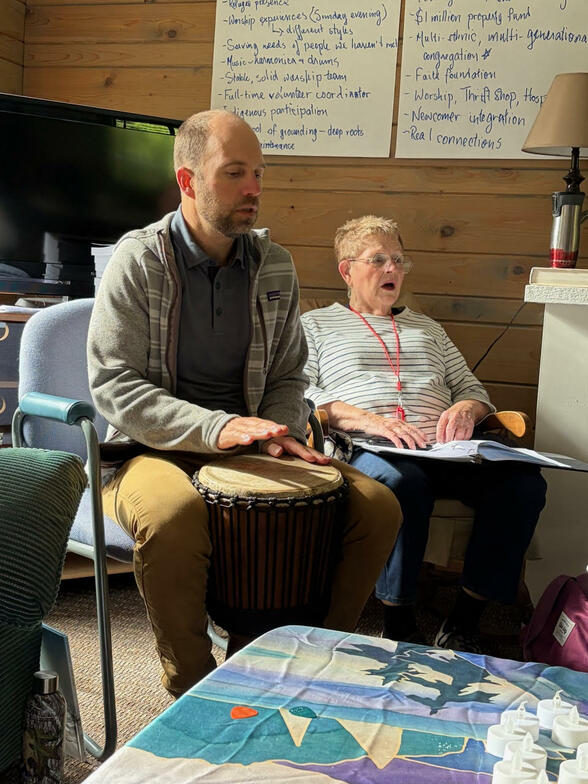
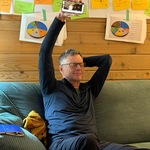
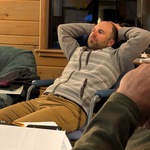
A few weeks ago, the board gathered for a retreat — June 5 to 7 at Bethlehem Centre in Nanaimo, a retreat and spirituality centre rooted in the Ignatian tradition, offering exactly the kind of quiet, prayerful setting we needed for the work ahead of us.
I want to begin by saying thank you — to this congregation, for your trust, and for sending us. The question we carried into the retreat was this: What is our world, and our community, yearning for — and how should we respond?
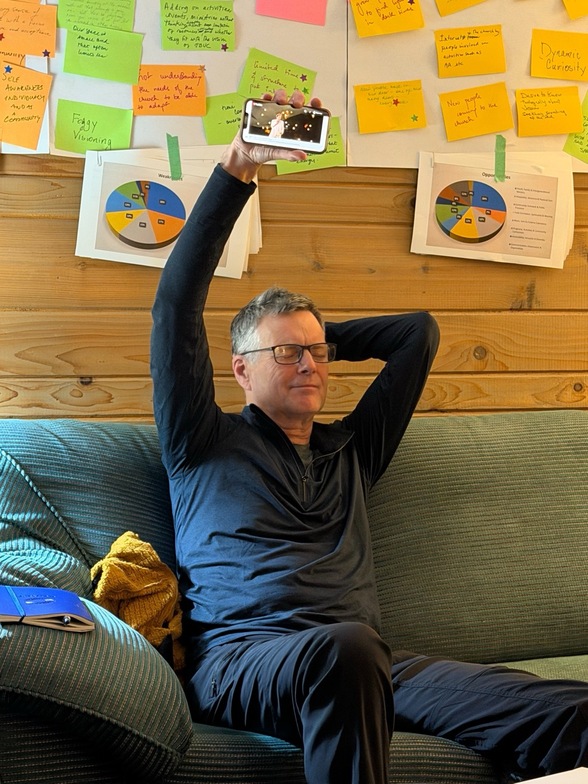
Friday evening — We began with a shared meal, then gathered for worship: music, a time of discernment, and communion. We asked ourselves the same questions you wrestled with at the congregational lunch — our strengths, what’s going well, our struggles, our opportunities, our vulnerabilities. We then compared our answers against a summary of your feedback. It was genuinely reassuring to find how closely aligned we were.
Saturday morning — After breakfast, we worshipped together and spent time learning about discernment — what it means to listen for the voice of God. We then turned to our governance model.
We looked at statements drawn from three different models — the representative model, the Carver model, and the UCC model — and sorted them: Yes, this is us and who we want to be. No, this is not us. Or: there’s partial truth here, but something would need to change.
The key takeaways: we stepped away from both the representative and the Carver models. We now have a set of statements that describe the kind of board we want to be — and the kind we don’t. And we made a commitment that any board member can ask, at any point during a meeting, without judgment: Is this the work the board should be doing?
Saturday afternoon — After lunch, we returned to music and discernment, then turned to our church’s current organizational shape. We have around 40 ministries, programs, teams, and committees. Many operate with considerable independence — sometimes in competition with one another for volunteers and finances.
During this session, we began exploring the idea of ministry clusters, and a missing link we’ve been feeling our way toward: a person who would connect with a cluster of ministries and serve as a bridge between those ministries and the board — carrying information in both directions, and helping ministries feel supported rather than isolated. We’ve been calling this role a Ministry Steward, though the language isn’t finalized yet.
We ended the afternoon with four emerging models that we hope to bring together into one — something we’ll eventually bring to you for conversation.
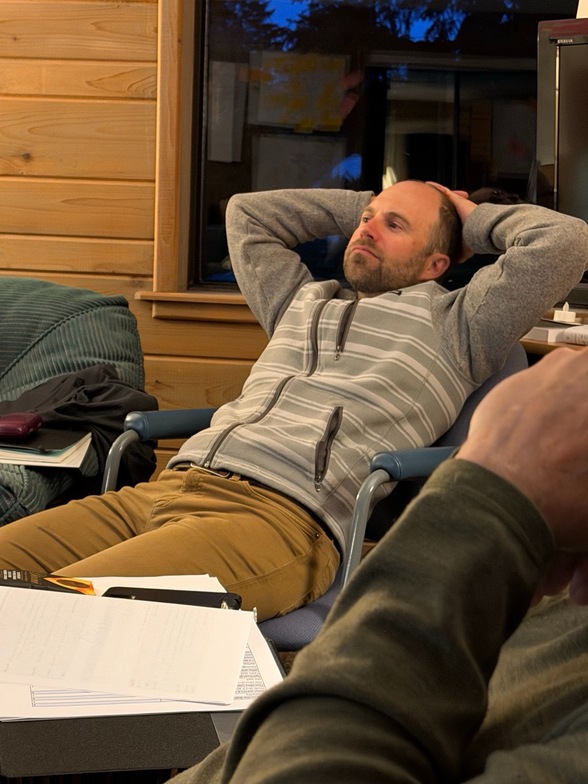
Saturday evening — After a break to walk the trails and the labyrinth, we shared a meal and then gathered for our final session of the day. We practised what we’d been learning about listening — first in quiet, then together — envisioning where we might be in 2 years, 5 years, 10 years. We filled pages.
We didn’t arrive at a plan or a blueprint. But I’m confident there’s now a deeper awareness of what we may be called toward — so that when opportunities present themselves, we’ll recognize them.
Sunday morning — We closed with worship, communion, and sharing. It was a rich and unhurried time.
We accomplished a great deal in those few days. But if I’m honest, the most important thing wasn’t on the agenda. It was the depth of relationship and trust that developed among us. I don’t know how that kind of thing could happen in two-hour monthly meetings.
A Word of Thanks
So many people made this retreat possible. To Gordon, for leading us in music — teaching us new songs, sharing stories, and reminding us that it only takes a spark. To Greg, Diane, and Colleen, for guiding us deeper into spiritual practice and sensitivity to the Spirit. To André, D’Arcy, and Deborah, for facilitating our sessions with such care. And to all of you — for your trust, and for sending us.
Next Steps
Here’s where we go from here.
Over the coming months, the board will continue to refine our governance model — translating what we’ve discerned into a written document, grounded in who we are and what we feel called to. That document will eventually be submitted to the Pacific Mountain Region of the United Church of Canada. Their policy requires that all congregations have a governance model, approved by both the congregation and the regional council.
We’re also continuing to work on a renewed picture of how we support one another as ministries — what our organizational shape might look like.
We’re planning two congregational meetings in the fall. The first will present concrete documents: our governance model, a revised picture of our organizational shape, and a detailed financial report. These are significant changes, and they need room — time to breathe, time for questions, time for real conversation.
A few weeks later, we’ll hold a second meeting to make formal decisions and submit a revised budget.
This work is important, and it belongs to all of us. Thank you.